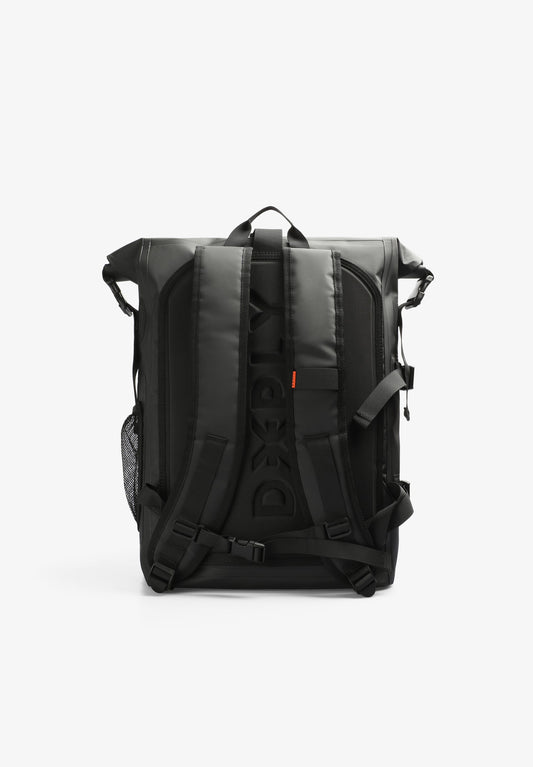
Surf Backpacks and Waterproof Dry Bags
A waterproof surf backpack is the accessory that completes your gear out of the water. Whether you're walking to the peak, traveling by car, or by boat, a dry bag protects your wetsuit, change of clothes, and personal items from splashes, rain, and sand. At Flysurf, you'll find waterproof surf backpacks with roll-top closures ranging from 25L to 40L.
Waterproof or water-resistant backpack?
They are not the same. A water-resistant backpack can withstand light rain but not immersion. A dry backpack with a roll-top closure completely seals its contents; you can put it in the water without a single drop getting in. For surfing, always choose a dry backpack: the car interior, a wet shoreline, and a dripping wetsuit are common conditions that a regular backpack cannot withstand. If you're looking for a surf dry bag that truly protects, the roll-top closure is the system you need.
What capacity do you need in your surf backpack?
Capacity in liters is the first selection criterion:
- 25L→ for those who travel light: swimsuit or rashguard, wax, keys, and phone. Ideal for quick sessions or warm climates without a wetsuit.
- 30L→ the most versatile. Fits a 3/2mm wetsuit, change of clothes, and personal items. The recommended capacity for most surfers.
- 40L→ for those who carry a thick wetsuit (4/3mm or 5/4mm), booties, hood, and a full change of clothes. Also for multi-day surf trips.
If you surf in winter in northern Spain with a 4/3mm wetsuit or thicker, don't go below 35-40L; a wet wetsuit takes up more space than it seems.
The roll-top closure: why it's the standard for surf dry backpacks
The roll-top closure works by rolling the backpack's opening over itself several times and fastening the safety buckle. No zippers to rust, no points of water entry. The more turns, the greater the seal. It's the system used by dry backpacks for kayaking, sailing, and water sports in general, and the reason they withstand conditions that would destroy any conventional backpack.
Comfort out of the water matters too
A surf dry backpack that only works in the water is not practical. Flysurf backpacks have padded adjustable straps, a reinforced top handle, and materials that don't retain the smell of a wet wetsuit with use. If you're also going to take it to work or travel, the clean and compact exterior design means it doesn't look like technical gear when you don't want it to.
Frequently asked questions about waterproof surf backpacks
What is the difference between a waterproof backpack and a dry backpack for surfing?
A waterproof or water-resistant backpack can withstand rain and splashes, but not direct immersion. A dry backpack with a roll-top closure completely seals its contents; water won't get in even if you submerge it. For surfing, where a wet wetsuit, sand, and the shore are constant conditions, a dry bag is the only option that truly protects.
What capacity do I need in a surf backpack?
It depends on what you carry. For light sessions without a wetsuit, 25L is sufficient. For most surfers with a 3/2mm wetsuit and change of clothes, 30L is the standard. If you surf in winter with a thick wetsuit, booties, and hood, you need a minimum of 35-40L. A wet wetsuit takes up considerably more space than a dry one.
What is the roll-top closure on surf backpacks?
It's a zipperless closure system that works by rolling the backpack's opening over itself several times and fastening the safety clip. It has no water entry points or metallic parts that can rust. The more turns you make, the more hermetic the seal. It's the standard system for dry backpacks used in surfing, kayaking, and water sports.
Does a wet wetsuit fit in a surf backpack?
Yes, that's precisely what they are designed for. A wet 3/2mm wetsuit fits in a 30L dry backpack along with basic change of clothes. If you have a 4/3mm or 5/4mm wetsuit with booties and a hood, you need a 40L surf backpack to fit it comfortably without forcing the roll-top closure.
Complete your surf gear
To keep your board in perfect condition in and out of the water, don't forget to check out our range ofDeflow surf waxto ensure grip, or choose one of oursurf gripsfor permanent traction. If you're going on a long trip, awaterproof backpackcombined witha good board bagfor yoursurfboardsis the guarantee that your equipment will arrive intact.


 -30%
-30%